Thankyou (By @happynikitakk)

​Hey Sir,

Just wanted to say a thank you from myself and on behalf of the rest of the class for a great course this semester. I think we have all learnt so much over the past two terms. You’ve really changed my attitude towards mathematics and I have learnt that there is more to maths than just applying formulas and difficult algebra. There were times during this semester where i had my mind blown, times when I got really excited when I solved a problem and even times when my brain hurt and I really felt like giving up. But, all in all this course has been an eye-opening experience for me and I’ve learnt a lot. I never thought i’d say this but maths can actually be fun. Thanks again!

#exploremaths

This message is intended for the addressee named and may contain privileged information
or confidential information or both. If you are not the intended recipient
please delete it and notify the sender.
http://ift.tt/19fNRe4

#ozftchat

It’s taken me a long time to dip my toes into the ocean of Twitter, but I’ve found it to be a really enriching place to go. I’ve had the opportunity to strike up lots of relationships and be exposed to lots of ideas that I wouldn’t have heard about if I stayed in my own little educational neighbourhood.

One of the greatest social structures that have emerged from Twitter are the scheduled chats. These are often run weekly (others run once a month), and see people gather to chat about a theme that’s related to their field. Naturally, I gravitate towards the teacher chats. Twitter isn’t the ideal medium for lengthy discussion of complex and nuanced issues, but that’s not what these are about. They are more like a teachmeet than a lecture: they cover a broad range of topics and connect a variety of people together, which then opens the door for further conversation later on.

I was very privileged to be the guest on #ozftchat a couple of weeks ago. Australian Family-Teacher Chat is hosted by the wonderful Jeannette James, and is exactly what it sounds like: a time for teachers and families to interact on questions and issues that affect them both (and there are lots of those). It’s a brilliant idea and a great way to open lines of communication that are more frequent and flexible than the annual parent-teacher interview.

As you might be able to imagine, I was brought in because the theme of this particular chat was mathematics. You can read a Storify of the chat here to see how it unfolded.

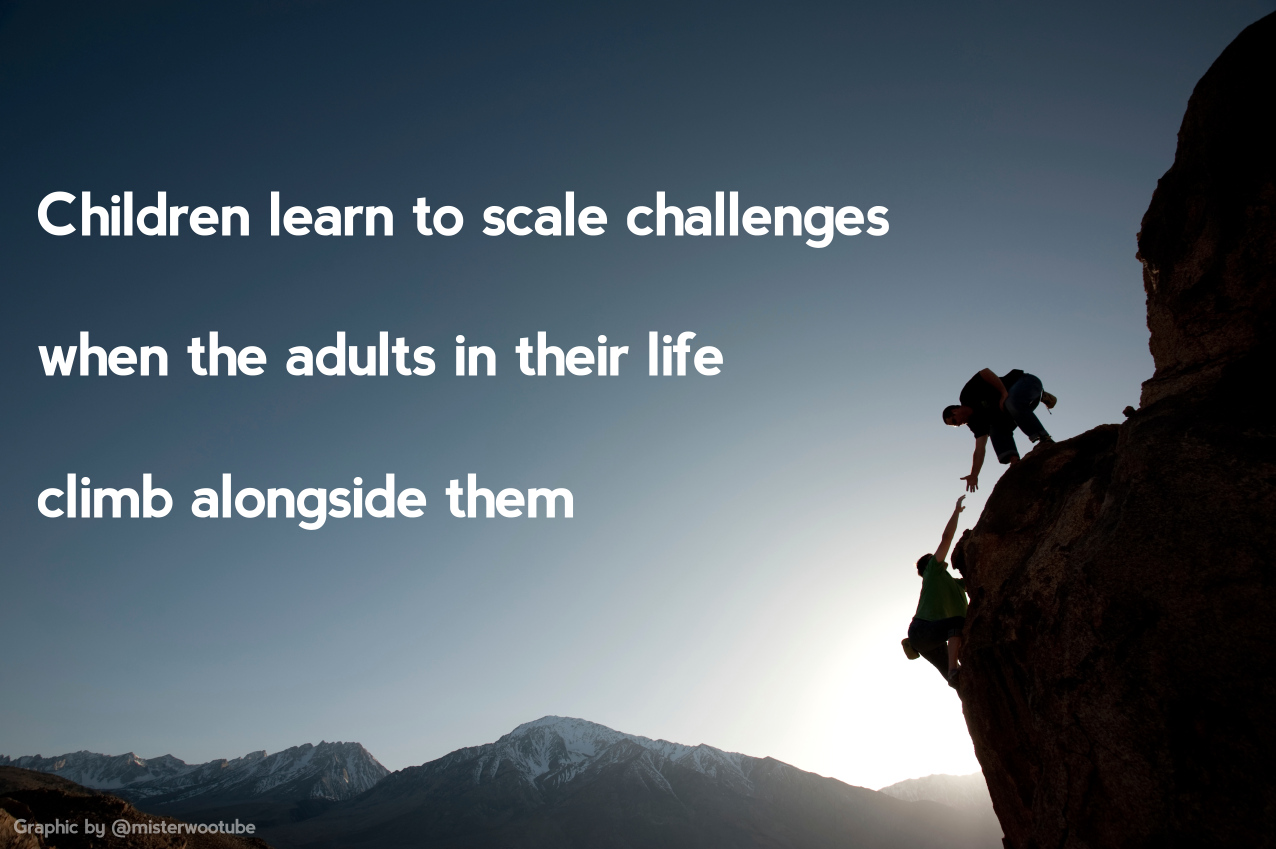
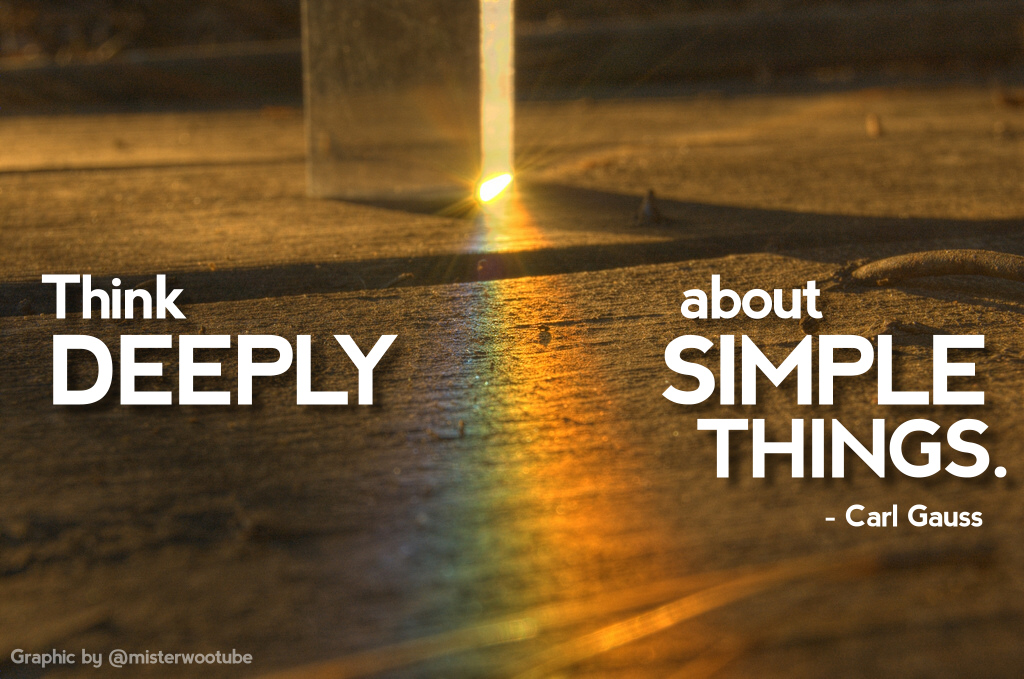
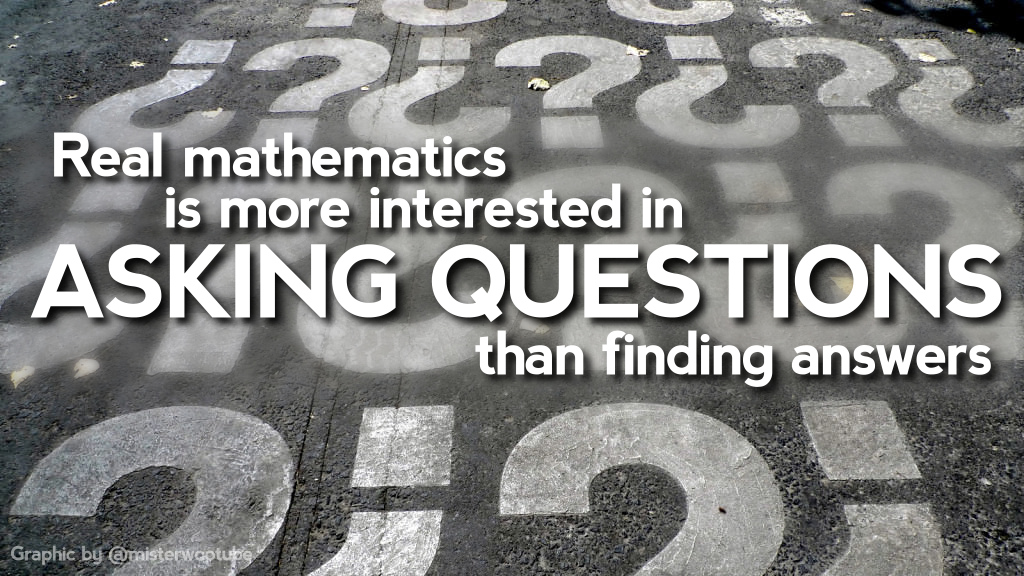
In preparation for the chat, I threw together a few quotes that communicated some of the key ideas I wanted to get across. Here they are:

2_think_deeply

3_asking_questions

6_climb_together

If you’re into education at all, whether from the parent or teacher side (or both!), the @ozftchat account is definitely worth following!

Troubled Acronyms

Random thought of the day…

Why have there been so many ways to describe people whose main language isn’t English? I count the following acronyms:

  1. ESL: English as a Second Language. Okay, so maybe English is your third or fourth language – I get the problem.
  2. LBOTE: Language Backgrounds Other Than English. So it has BOTE in the acronym, which is a homonym for BOAT, which might be the way that some refugees arrived in the country and has negative connotations with some? Okay, I guess that could be construed as an issue.
  3. NESB: Non-English Speaking Background. So what’s wrong with this one? I thought it rolled off the tongue quite nicely, actually.
  4. EAL/D: English as an Additional Language/Dialect. This one wins points for using an extra symbol to squeeze in more meaning. Yowzer, it sounds so awkward to say out loud: “Eee Ay Ell Slash Dee”.

I guess I shouldn’t stress about it… in a year or two we’ll probably have a new one.

Don’t smile till Christmas

I started publishing videos for students. But one of the things I least expected about doing this is how many teachers who have reached out and gotten in contact with me. I wanted to share one of the questions that was sent in, and my response.

Hey Eddie,

I am at university and about to begin my teaching internship. I am often asking educators about classroom management and behavior strategies since its the one thing I am most worried about in terms of becoming a teacher. The most common response I get is the need to set up routine, but also to literally be in terminator mode in terms of strictness and firmness for a term (I have also been told about the “don’t smile till Christmas” idea). Whilst I understand the need to be firm/strict, I came into teaching because I knew it could be challenging but extremely fun at the same time and it just isn’t in me to be that teacher that is constantly nagging and picking on minor things in order to set a standard for the class. I think me and you are similar in the sense that we like to, or even NEED to, engage with the students on a level that makes it enjoyable for the both of us. However its clear that you have accomplished this to a much higher level than I have even come close to in the past on pracs and you have found that balance between engaging with students and knowing when to assert your position.

So my question for you is, how do YOU set your standards, routines and behavior expectations with a class in your first couple of weeks with them and how do you go about easing those expectations over time to create that relaxed classroom nature.

As you might be able to tell from how I interact with my students, I have never felt entirely comfortable with the Terminator mode idea. I received similar advice while at uni and gave it a real go, but found it didn’t gel effectively with my personality. I felt like I wasn’t being myself whenever I took that approach to interacting with students, and it didn’t seem to help me or them at establishing a positive learning environment. I did, however, recognise that I needed to act and speak in ways that didn’t come naturally to me at first. I couldn’t be a Terminator all the time, but I had to master the ability to be a Terminator some of the time – when it was really necessary to draw the line in terms of expected behaviour inside and outside the classroom. It wasn’t in my personality to be dead serious about everything, but if I wasn’t able to be dead serious some things, then I would just come across as flippant and dismissive. That’s not doing a service to the kids any more than being angry all the time would be.

I guess my primary tip for classroom management is this. The key is not any technique or program in particular – even though I’ve learnt tons and they’re all useful. The key is relationship. When we walk into that classroom, we are not just there to transmit information. We are there to form a relationship with the kids, and that relationship becomes the conduit through which information and understanding flows. Have you heard this phrase before? “Students don’t care how much you know, until they know how much you care.” It sounds a bit cutesy, but I’ve found it to ring very true with my experience. That means you care about them and ask how they’re doing as human beings. But it also means you care about their standard of conduct and will discipline them where necessary. If students see you don’t care in either of those ways, you will quickly see that no management strategies in the world can establish a really effective environment for learning – at least not for long.

So to answer your question directly: what do I do in those first couple of weeks? I don’t think I can give you any blanket advice here. I’ve taken a slightly different approach with every single student I’ve ever met, and that’s because (for all their similarities) every single student is unique. This is something that is best gained with experience: you need to learn how to read students and their particular needs, and respond accordingly. Some of them need you to be really serious, sure. But they also need to see that you can laugh. That you are genuinely concerned when they are going through hard times. That you can call them by name, look them dead in the eye with burning anger and tell them to leave the room immediately when they act in a way that harms or endangers another student. And to do all this in a way that’s consistent with your own character and personality. They need to experience your full range of emotion, in the right place at the right time, for you to earn their respect. And in that context, learning can really thrive.

Practical tips for maths teachers: the growth mindset (TER Podcast follow-up #2)

Last time I wrote some thoughts I had after completing my interview for the TER Podcast about maths education. You can go back and read that if you’re interested in thinking through some of the big-picture issues surrounding the problematic state of maths education in Australia. Following on from that post, I want to share some more practical pointers that I’ve observed to be helpful in a variety of different classes and contexts. Each one is its own idea, so I’m going to devote a few posts to unpacking them in a bit of detail.

What are some of the effective approaches you’ve seen people use? Answer number one: adopting a growth mindset.

First things first. It’s vital that teachers regard their students with a real growth mindset. This is a phrase familiar to anyone who has read the work of psychology professor Carol Dweck, who gives the best summary of what the idea is about:

In a fixed mindset students believe their basic abilities, their intelligence, their talents, are just fixed traits. They have a certain amount and that’s that, and then their goal becomes to look smart all the time and never look dumb. In a growth mindset students understand that their talents and abilities can be developed through effort, good teaching and persistence. They don’t necessarily think everyone’s the same or anyone can be Einstein, but they believe everyone can get smarter if they work at it.

You can see why this is such a big deal to maths education. Maths, perhaps more than any other subject in school, is dominated by a fixed mindset. There are people who are good at maths and then there are the rest of us. In fact, the phrase, “I’m no good at maths” has entered into our cultural vernacular and sadly become an acceptable response to anything encountered in everyday life that involves numbers or numerical thought.

The problem here is that this kind of thinking becomes a sort of self-fulfilling prophecy. When we think of ourselves as unable to do mathematics, we don’t bother trying – and hence deprive ourselves of the very experience that will allow us to develop mathematical skill (namely, struggling to grasp numerical concepts and master the tools necessary to solve problems that require their application).

It doesn’t take too much imagination to realise that our self-concept when it comes to our mathematical ability isn’t just self-generated. It is formed, in large part, by those we trust to nurture and develop us as mathematicians – our maths teachers. What kind of an effect do we as maths teachers expect to have if we consistently communicate that “This is too hard for you, and you will never be able to succeed at it no matter how hard you try”?

And sadly, whether it’s through the bevy of tests that end in failure, or the advice to children to take the mathematics course that will maximise their ATAR rather than challenge and enrich them, or even just the little interactions with students every lesson that erode their self-confidence – this is the message that students often pick up from us, their maths teachers. Some students survive this process, but many don’t. They aren’t just disempowered – they’re paralysed. No wonder “maths anxiety” is a thing (who ever heard of any other subject that has its own psychological malady associated with it?). What a tragedy.

It’s obvious that people can take the growth mindset too far. One of the most enduring characteristics of truth in all spheres is that it will always be abused by someone with the wrong idea about how it should be interpreted, and this is no exception. If you’re curious about this and want to know how to avoid that particular trap, you can watch a vlog I recorded about it a few months ago.

But that isn’t most of us. For most of us, the growth mindset is a breath of fresh air. Yes, anyone can master maths! Sure, it takes some more time than others – but who is surprised by that given that every human being is unique and brings a new perspective and set of skills to the table? Rather than view those differences as a cage locking us into a certain level of achievement, let’s embrace them and see how they can be brought to bear on the pursuit of mathematical understanding that we should all be a part of.
Term 3 Summary

hourglassWe are halfway through the Exploring Mathematics course – and I hope you’ve enjoyed learning some really interesting and unusual mathematical ideas! This seemed like a good time to make sure everyone is on the same page with the current assessments that you’re all working on.

AT1: Class Discussion
At this stage in the course, you have (including today’s lesson, listed below) TEN posts that you should have written in response to concepts and work done during our lessons. Here they are for those who can’t remember:

  1. Introductory lesson
  2. The Golden Ratio
  3. 3 videos (Beauty & Mathematics)
  4. Fractals
  5. Artwork ideas
  6. Set Theory topic review
  7. Discovery or invention?
  8. Comparing the sizes of sets (rational vs. natural numbers)
  9. Division by zero (What is 0 divided by 0? How about 0 to the power of 0?)
  10. Video ideas (today’s lesson)

Please check back through all the posts and make sure you are up-to-date. Don’t forget to participate in the dialogue too by actively discussing and questioning the ideas posted by others.

AT4: Video Composition
You have already formed your groups for this, and you’ve already been issued the assessment outline. Today your task is to identify three potential ideas to make your video about and then create storyboards for each. You must then write individually about:

  • The pros and cons of each idea
  • Which idea you like best and why
  • How you (personally – not the whole group) will contribute to the project in the lead-up to submitting Stage 1 (draft)

Happy holidays everyone!

TER Podcast follow-up: the big issues

2014 has been a year full of firsts for me. First year teaching in a comprehensive school (student teacher placements notwithstanding). First year as a head teacher (which has produced a whole lot of firsts of its own). First time recognised in public because of the videos I make. And as I type this, I’m at my first MANSW Annual Conference (arguably the biggest gathering of maths teachers in the state all year), my head spinning from considering new ideas and meeting new people (or in some cases, seeing people face-to-face who I’ve been interacting with online for a long time now).

Another first happened last month, when I participated in a phone interview with Corinne Campbell (@corisel) for the TER Podcast. The topic was Is Maths Education Broken?, and I was there to provide a sort of foil to an interview that Corinne had with the luminary Conrad Wolfram (of Wolfram Alpha fame). You can listen to the entire episode (and if you’re in education and haven’t subscribed to the podcast, you really ought to). It was an interesting experience, not least because it was so unusual to actually interact with a voice that I was so used to just listening to passively through a podcast.

I’m the kind of person who thinks of the perfect witty comeback or joke ten minutes after the conversation is over. So even though I had prepared my own thoughts and notes before the interview and tried my best to cover everything that would be important, I found myself in the shower that evening thinking, “Oh, _this_ would have been the perfect answer to that question!” and “How on earth did I forget to say _that_?” So here are a few of the things that I should have said, but forgot to. In this post I’m going to talk about the large-scale issues that are related to the “STEM crisis” Australia is experiencing, and in a follow-up post I’ll talk about some of the smaller practical strategies that can be employed in the classroom to help our students from day to day.

How do we improve STEM skills in Australian schools?
There’s no simple solution to this one – so you can know with a fair degree of certainty that if someone tells you they have a straightforward way to fix this problem, they’re probably just oversimplifying the situation. The so-called STEM crisis is a perfect storm of different factors and so there won’t be a single actionable item to fix things.

But there are definitely many identifiable aspects of the challenge. For instance, the syllabus is by-and-large divorced from real mathematical practice (both in everyday life and in vocational contexts). Here’s a great little quote from Optimising the Future with Mathematics (via The Conversation):

Current mathematics education, in schools and universities, is satisfied with programming students to carry out certain mathematical processes, and assessment rewards students who can calculate everything even if they understand nothing.

So what can we work on at the ground level? Firstly, it’s vital to recognise the enormous continuity of learning in maths. All key learning areas exhibit a degree of intra-dependence within their skills and knowledge, but it seems to be especially noticeable in maths where a single “weak link” in the chain can be disastrous! Once student confidence is lost, it is hard (not impossible, but significantly challenging) to rebuild it.

Secondly, top-down (syllabus level) change is required, but we can’t wait for that to happen. Policy is always hard and slow to change (it must be in a democratic and bureaucratic environment), but we can push the envelope of our daily practices right now and see what works. We can undertake action research projects into what is effective and helpful. Another insightful quote:

We need mathematics “to be taught more like it is done” by those engaged in it, in both the innovations economy and research. This is a cultural change that involves the discipline itself, one that must be mainstreamed into school and university systems.

These cultural changes almost never come as mandates from above – they are typically born out of grassroots movements from below that are then recognised and ratified by authorities.

Artwork Progress (by @brendanmckee99)

I started doing a draft for my artwork, seeing how hard it is to construct a Levy Curve. The picture attached is how far I got, and is halfway through constructing another iteration of the pattern. It is just a draft version and is quite messy and not exact.

#exploremaths

This message is intended for the addressee named and may contain privileged information
or confidential information or both. If you are not the intended recipient
please delete it and notify the sender.
http://ift.tt/1nhkPAa